
Canada opened China EVs

Canada’s Pivot to Chinese EVs: A Strategic Trade Shift and What It Means for the Market

Executive Summary: A Landmark Policy Reversal

In a move that signals a significant shift in North American trade dynamics, Canada has reached a groundbreaking agreement with China to reduce its tariff on Chinese-manufactured electric vehicles from 100% to 6.1%. Announced during Prime Minister Mark Carney’s January 2026 visit to Beijing, this “EVs for Canola” deal represents a strategic decoupling from the United States’ hardline stance on Chinese automotive imports. The agreement includes a managed quota system, starting at 49,000 vehicles annually and scaling to approximately 70,000 over five years, potentially introducing affordable EVs priced under $35,000 CAD into a market where the average new vehicle costs around $63,000.


Analysis of the Core Agreement

The Tariff-Quota Mechanism

The bilateral agreement establishes a structured framework for market access:

  • Immediate Tariff Reduction: The punitive 100% tariff—previously aligned with U.S. policy—plummets to 6.1%, a rate that makes Chinese imports commercially viable.

  • Phased Import Quotas: To ensure market stability and allow for domestic adjustment, imports are capped. The initial annual quota of 49,000 vehicles (representing a small but strategic portion of Canada’s 1.8 million annual new car market) is set to grow to ~70,000 over five years.

  • Reciprocal Agricultural Concessions: In a classic example of comparative advantage trade, China has agreed to lower tariffs on key Canadian agricultural exports, most notably canola seeds, providing a vital boost to the Canadian agri-sector.

Strategic Motivations Behind the Deal

This policy shift is driven by several interconnected factors:

  1. Affordability Pressures: With record-high vehicle prices, the Canadian government is under public pressure to increase affordable transportation options. This deal directly addresses that need.

  2. Diversification of Trade and Supply Chains: Reducing economic over-reliance on any single partner (including the U.S.) and diversifying sources of critical technology like EVs is a long-term strategic priority.

  3. Strained U.S.-Canada Relations: The deal occurs against a backdrop of tense Canada-U.S. relations, marked by previous U.S. tariff actions and rhetoric. Canada is asserting a more independent trade path.

  4. Greening the Fleet: Accelerating EV adoption is a cornerstone of Canada’s climate policy. Introducing more affordable models can help accelerate this transition.


Market Impact and Competitive Landscape

Opportunities for Consumers and New Entrants

  • Price Disruption: The potential arrival of Chinese-branded EVs starting below $35,000 CADcreates a new competitive tier in the market, currently underserved by most North American and European automakers who are focused on higher-margin segments.

  • Technology Infusion: Chinese OEMs are often leaders in in-vehicle infotainment, connectivity, and battery efficiency. Their entry could raise the technological benchmark for all players in the Canadian market.

  • Increased Choice: Brands like BYD, NIO, XPeng, and Zeekr could offer Canadian consumers diverse options, from budget-friendly compacts to tech-laden premium vehicles.

Challenges for Incumbent Automakers

  • Margin Pressure: Established automakers (GM, Ford, Stellantis, Toyota, Honda) may face intensified pressure on their entry-level and mid-range EV offerings, potentially forcing price adjustments or accelerated innovation cycles.

  • Supply Chain Re-evaluation: The deal may incentivize Chinese automakers to eventually establish local assembly or battery production in Canada to further reduce costs and meet potential local content rules, altering the existing North American supply chain map.


The Geopolitical Context: Canada Charts Its Own Course

This agreement marks a clear divergence from U.S. trade policy. While the U.S. maintains its high tariffs under the current administration, Canada is pursuing a more pragmatic, engagement-based approach with China in specific sectors. This could have ripple effects, potentially encouraging other allies to consider similar calibrated openings. The deal underscores Canada’s intent to balance its deep integration with the U.S. economy with its own national interests in affordability and trade diversification.


Long-Term Implications and Strategic Considerations

For Businesses in the Automotive Ecosystem

  1. Dealerships and Retail: A new wave of brands will require retail partnerships and service networks, creating business opportunities for forward-looking dealership groups.

  2. Parts and Service: The automotive aftermarket will need to prepare for new makes and models, involving training, tooling, and parts sourcing.

  3. Market Intelligence: Competitors must closely analyze the features, pricing, and consumer reception of the first Chinese EV models to land in Canada.

For Policymakers and Industry Groups

  1. Transition Management: The quota system is designed to manage the pace of change. Its effectiveness in allowing domestic adaptation will be closely watched.

  2. Standards and Safety: Ensuring all new imports meet Canada’s stringent safety and environmental standards is paramount.

  3. Future Negotiations: This deal may set a precedent for how Canada negotiates market access in other high-tech sectors.


Conclusion: A Watershed Moment for Canadian Auto

Canada’s tariff-quota deal with China is more than a simple policy adjustment; it is a strategic recalibration of its automotive and trade policy. By opening the door to competitive Chinese EVs, Canada is prioritizing consumer affordability, technological choice, and strategic trade diversification in the short to medium term. While presenting challenges for the established industry, this move also injects new dynamics into the market that will likely spur innovation, competition, and ultimately, a faster transition to electric mobility. The success of this policy will be measured by how smoothly the market integrates these new players and how effectively Canadian consumers and businesses harness the benefits of this increased choice and competition.

The automotive landscape in Canada is evolving. Stay informed on market shifts, regulatory changes, and strategic opportunities by subscribing to our insights.

[Click Here to Contact Amor Energy]

How Energy Storage Systems Save Costs for Vancouver Office Buildings: A Case Study

A Real-World Case Study from Downtown Vancouver

As electricity costs continue to rise, managing peak demand and controlling operational expenses has become a critical challenge for commercial building owners. This pressure is intensifying as buildings undergo electrification—adding EV charging stations, upgrading HVAC systems, and supporting higher electrical loads.

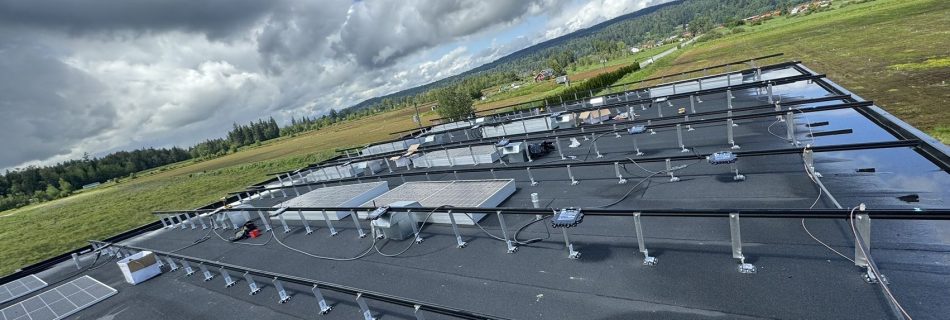
This article explores a real-world case study of a mid-rise office building in downtown Vancouver that installed an Energy Storage System (ESS) to participate in BC Hydro’s Energy Storage Incentive (ESI) program. The result: substantial electricity bill savings, new revenue streams, and enhanced building resilience.


Why Energy Storage Matters for Commercial Buildings

In British Columbia, a significant portion of a commercial electricity bill comes from demand charges, which are based on a building’s highest power draw during peak periods. As electrification accelerates, these peak loads increase—often triggering sharp cost spikes.

An Energy Storage System (ESS) addresses this challenge by:

  • Discharging during peak hours to reduce maximum demand (peak shaving)

  • Lowering demand charges on monthly electricity bills

  • Enabling participation in utility Demand Response (DR) programs

  • Supporting grid reliability while improving building resilience

Rather than viewing batteries as backup power alone, this case demonstrates how ESS can function as a strategic financial and operational asset.


System Configuration and Key Benefits

System Overview

  • ESS Cabinets: 4

  • Total Usable Capacity: 672 kWh

  • Continuous Discharge Power: 240 kW

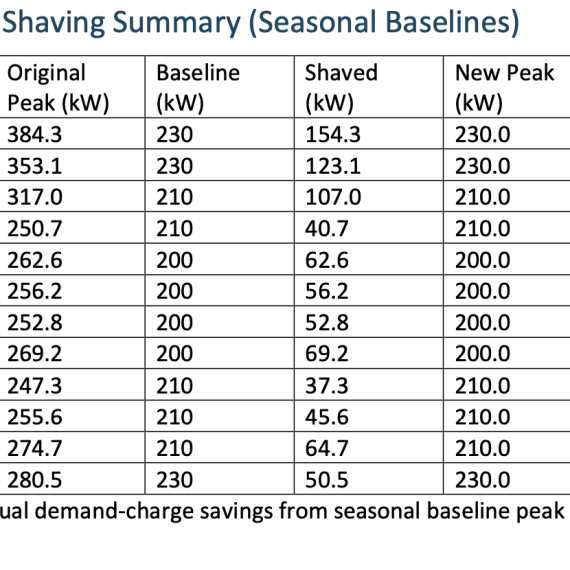
  • Monthly Peak Shaving: 40–150 kW (seasonally dependent)

Measured Benefits

1. Electricity Cost Savings
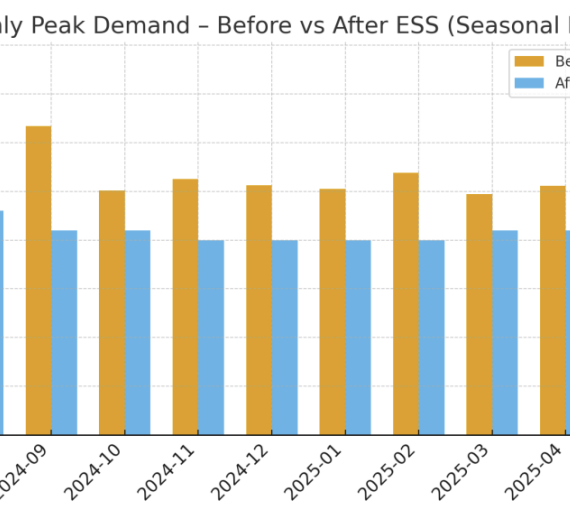
Seasonal peak shaving reduces annual demand charges by approximately $11,833 CAD, delivering immediate and measurable savings.

2. Strong Financial Incentives

  • BC Hydro ESI Program: Covers up to 80% of total project costs

  • Federal Investment Tax Credit (ITC): Applies a 30% tax credit to the remaining balance

These incentives dramatically reduce upfront capital requirements and shorten the investment horizon.

3. Demand Response Revenue
By responding to BC Hydro DR events, the ESS generates approximately $7,350 CAD annually in additional revenue.

4. Deferred Infrastructure Upgrades
Peak demand reduction helps delay or avoid costly upgrades to:

  • Transformers

  • Electrical distribution equipment

  • Utility service capacity

5. Improved Building Resilience
A portion of battery capacity is reserved for critical loads, such as elevators and life-safety systems, helping ensure operational continuity during grid disruptions or emergency events.


Intelligent Control and Seasonal Optimization

The system is managed by an advanced Energy Management System (EMS) that dynamically adjusts peak shaving targets based on seasonal load profiles:

Season Peak Shaving Baseline
Winter (Nov–Feb) 200 kW
Shoulder Seasons (Mar–May, Sep–Oct) 210 kW
Summer (Jun–Aug) 230 kW
  • On non-DR days, the ESS automatically shaves peak demand

  • During DR events, the system prioritizes grid support

  • Battery recharging is scheduled during off-peak hours to avoid creating new demand spikes

This adaptive strategy ensures consistent savings while maximizing grid participation value.


Financial Performance and Payback

  • Total Project Cost: ~ $1,000,000 CAD

  • Net Cost After Incentives: ~ $103,400 CAD

  • Annual Net Benefit: ~ $14,183 CAD

  • Simple Payback Period: ~ 7.3 years

Given the typical 15–20 year lifespan of commercial battery systems, this represents a strong long-term return on investment.


Why Now Is the Right Time to Invest in Energy Storage

Compelling Incentives
The combination of BC Hydro’s ESI program and the federal ITC significantly lowers financial barriers to adoption.

Favorable Rate Structures
With demand charges representing a large share of commercial electricity costs, peak shaving delivers immediate value.

Grid and ESG Alignment
Energy storage not only reduces costs but also supports grid stability and sustainability goals.

Future-Proofing Your Building
ESS prepares properties for expanded EV charging, deeper electrification, and higher tenant expectations—enhancing long-term asset competitiveness.


Conclusion

This downtown Vancouver case study demonstrates that, with proper system design and intelligent controls, energy storage systems can significantly reduce operating costs while providing valuable grid services.

As policy support strengthens and technology continues to advance, energy storage is evolving from a niche solution into a core component of modern commercial building strategy.

Interested in learning how a tailored energy storage solution could benefit your building?
Contact us today to explore your options.

The data and analysis presented in this article are based on real load profiles and commercially available system designs. Actual results may vary depending on building usage patterns, grid dispatch frequency, and program updates. Professional assessment and modeling are recommended.

[Click Here to Contact Amor Energy]

BC Hydro Residential Battery Rebates Are Changing in 2026: What Homeowners Need to Know

Starting April 1, 2026, major updates are coming to BC Hydro’s Residential Battery Rebate Program. For homeowners planning to install a battery or a combined solar + battery system, these changes will impact how much financial support you can receive — and how to maximize your incentives before the deadline.

As a leading clean-energy provider in Metro Vancouver, Amor Energy helps homeowners navigate rebates, design efficient systems, and install reliable home energy solutions across BC.


📅 When Will the New BC Hydro Battery Rebate Begin?

The updated rebate structure will take effect on April 1, 2026.

➡️ Important Deadline:
All applications submitted before April 1, 2026 remain eligible for the current (old) rebate rates.
If you’re considering a home battery installation in BC, now is the ideal time to move forward.


🔋 New BC Hydro Battery Rebate Structure for 2026

BC Hydro’s new incentive model strongly emphasizes participation in the Peak Saver Program, which allows batteries to support the grid during high-demand periods.

Below is a clear breakdown to help BC residents understand the new policy.


1. Battery-Only Installation

Eligibility Total Incentives One-Time Battery Rebate Peak Saver Seasonal Payment
Not enrolled in Peak Saver None None None
Enrolled in Peak Saver Up to $5,000 $5,000 $250 per season

2. Battery + Solar Installation (Best Savings)

A popular choice for homeowners looking to combine solar installation with home energy storage.

Eligibility Total Incentives One-Time Battery Rebate Solar Incentive Peak Saver Payment
Not enrolled in Peak Saver Up to $1,500 for battery + up to $5,000for solar $1,500 Up to $5,000 None
Enrolled in Peak Saver Up to $5,000 for battery + up to $5,000for solar $5,000 Up to $5,000 $250 per season

➡️ Homeowners who install solar + battery and join Peak Saver may receive $10,000+ in total incentives, making this the most cost-effective option.


⚡ What Is the BC Hydro Peak Saver Program?

The Peak Saver program is a demand-response initiative that enables BC Hydro to manage electricity load using stored power from Peak Saver-compatible home batteries.

How Peak Saver Works

  • Your battery discharges to power your home during peak demand.

  • The battery will not drop below 20%, ensuring you retain backup power.

  • Each event lasts a maximum of 4 hours.

  • After the event, the system returns to normal and recharges automatically.

  • You maintain full control — you can opt out at any time.

  • Remain active for most events in a season to qualify for the $250 seasonal payment.


🔧 Peak Saver-Compatible Batteries

Only Peak Saver-compatible batteries qualify for the highest rebate tier.
If you’re unsure whether your preferred battery model works with Peak Saver, you can contact BC Hydro at peaksaver@bchydro.com, or our team at Amor Energy can assist you.

We help homeowners choose systems that qualify for the maximum available rebate.


💡 How to Maximize the 2026 Battery Rebates in BC

Here are our professional recommendations:

1. Install Battery + Solar Together

This combination unlocks the highest rebate tier, providing up to $10,000+ in incentives.

2. Apply Before April 1, 2026

Applications submitted before the new policy takes effect may qualify for higher old-program rebates, depending on your system.

3. Choose a Peak Saver-Compatible Model

This ensures eligibility for the full $5,000 battery rebate plus seasonal payments.

4. Work with a Certified Installer

Amor Energy provides:

  • Home battery installation

  • Solar PV system installation

  • Rebate application support

  • Peak Saver enrollment assistance

  • System design & maintenance


Why Homeowners Choose Amor Energy

As a trusted solar and battery installation company in BC, we specialize in:

  • Clean energy solutions

  • Home energy storage systems

  • EV charger installations

  • BC Hydro rebate guidance

  • Sustainable home upgrades

Our team ensures your system is safe, compliant, and optimized for maximum rebate savings.


Ready to Secure Your BC Hydro Battery Rebate?

Whether you’re planning to install a home battery, upgrade to solar + storage, or join the Peak Saver program, Amor Energy can guide you through every step.

📞 Contact us today for a free consultation.
🔗 Learn more at: amorenergy.ca

[Click Here to Contact Amor Energy]

Accessing BC’s Home Energy Rebates: The Importance of Working with an HPSC-Certified Contractor

Your Guide to BC’s Home Energy Rebates: Working with an HPSC-Certified Contractor

If you’re a homeowner in British Columbia considering upgrades like an electric vehicle charger, solar panels, or a home battery system, you’ve likely heard about provincial rebate programs that can help offset the cost. But navigating the requirements can be confusing.

A critical question often arises: “Why do I need to use a specific contractor to qualify for these rebates?”

The answer lies in understanding the Home Performance Contractor Network (HPCN) and the standards set by the Home Performance Stakeholder Council (HPSC).

The Standard for Quality: HPSC Certification and the HPCN

Let’s break down what these mean for your project.

  • HPSC (Home Performance Stakeholder Council): This is the independent, non-profit body that administers the Home Performance Contractor Network (HPCN). HPSC sets the industry standards for quality and energy performance.

  • HPCN (Home Performance Contractor Network): This is the official network that homeowners must use for various provincial rebate programs. To become an HPCN contractor, a company must achieve HPSC certification, proving their technical expertise and commitment to quality installations.

In simple terms: HPSC certification is the qualification that allows a contractor to join the HPCN network, which is your gateway to government rebates.

This system is a vital consumer protection measure. It ensures that the contractors installing complex energy systems in your home are qualified to do the job correctly and efficiently.

The Mandatory Future of Rebates: HPSC Certification is Essential

The link between working with an HPCN contractor and rebate access is about to become absolute.

Here is the essential information:

Currently, using an HPCN contractor is a standard requirement for most rebate programs. However, starting in 2026, this requirement will be strictly enforced.

What does this mean for you?

  • If you plan to apply for a government rebate after 2026, your application will only be accepted if the work was performed by an HPSC-certified contractor within the HPCN.

  • Choosing a contractor who is not part of the HPCN after this deadline will make your project ineligible for financial assistance.

This policy reinforces the government’s commitment to ensuring public funds support high-quality, effective upgrades that deliver real energy savings.

Amor Energy: Your HPSC-Certified Contractor in Vancouver

We are proud to be an HPSC-certified contractor and part of the Home Performance Contractor Network (HPCN).

Our HPSC certification means we have met the rigorous standards required to perform rebate-eligible work. When you choose Amor Energy, you are choosing a contractor recognized for their expertise and commitment to quality in the home performance industry.

By working with us, you receive:

  1. Assured Rebate Eligibility: Your installation will meet a key requirement for provincial rebate programs. We handle the necessary documentation to support your application.

  2. Quality Assurance: Our work adheres to industry standards, ensuring your EV charger, solar panel system, or home battery is installed safely and effectively.

  3. A Streamlined Process: From consultation to rebate submission, we guide you through each step of your home energy upgrade.

What This Means for Your Home Upgrade Projects

Whether you are planning to install:

  • A Level 2 EV Charger

  • A Solar Panel Array

  • A Home Battery Storage System

…working with an HPSC-certified contractor like Amor Energy is essential for a successful project and accessing available rebates.

Ready to Upgrade with Confidence?

With the 2026 deadline approaching, now is the time to plan your upgrade with a certified professional. Choosing Amor Energy, an HPSC-certified contractor, ensures your project aligns with current and future program requirements.

Contact Amor Energy today for a free, no-obligation assessment. Discover how much you can save with government rebates and get a quote from your local Vancouver HPSC-certified contractor.

[Click Here to Contact Amor Energy]