
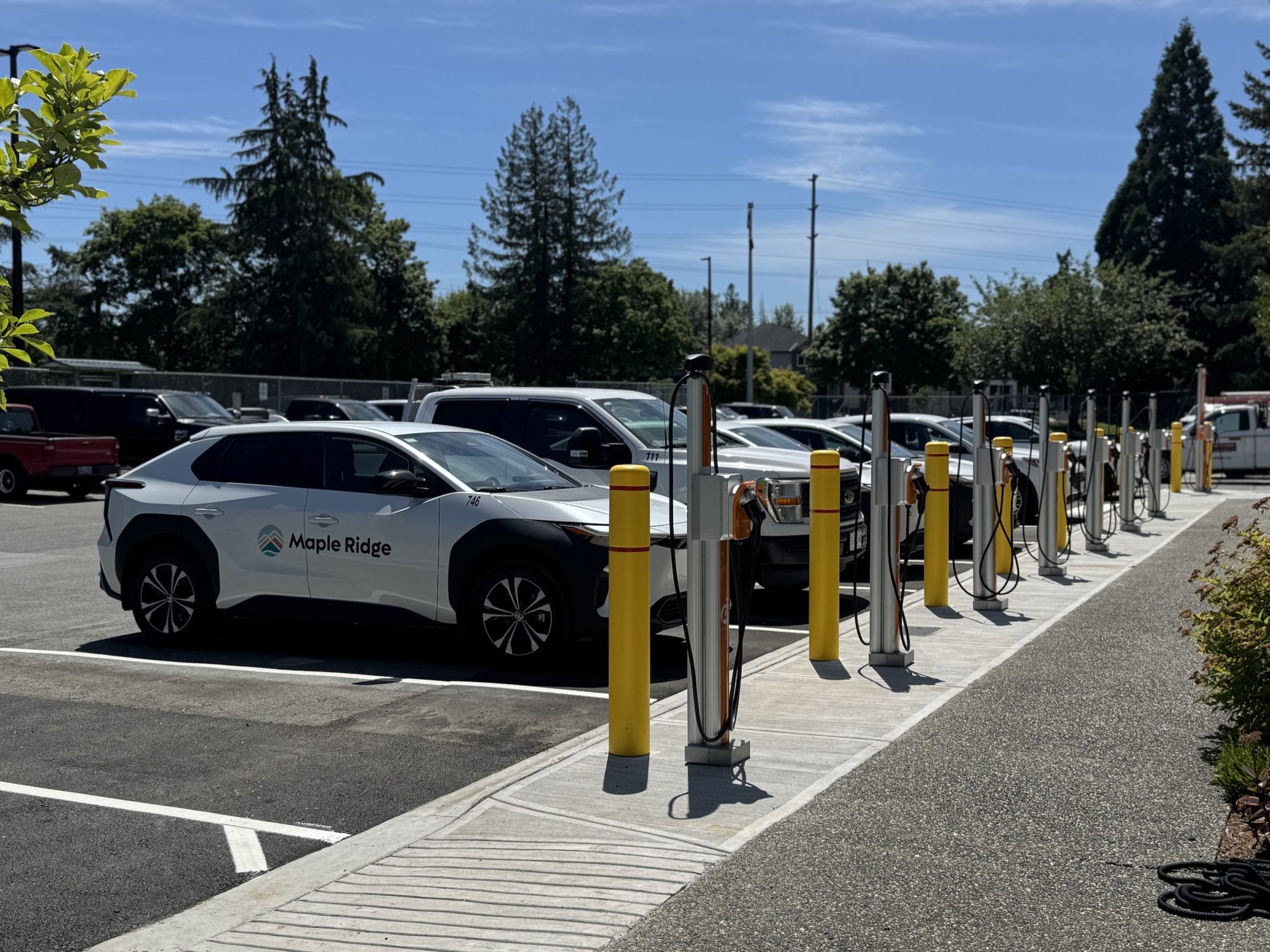
As electric vehicles become more common across British Columbia, the need for convenient and reliable EV charging infrastructure continues to grow.
While much of the conversation around EV charging focuses on public charging stations and residential chargers, municipal and workplace charging infrastructure also plays an important role.
Municipal facilities need to prepare for an increasingly electrified transportation environment—not only for their own vehicles and operations, but also for employees, contractors, and visitors who drive EVs.
A recent project completed by Amor Energy for the City of Maple Ridge provides an example of how organizations can take steps toward becoming more EV-ready.
What Is Municipal EV Charging Infrastructure?
Municipal EV charging infrastructure refers to EV charging equipment installed at facilities operated or managed by a municipality.
Unlike public charging stations that are primarily designed for general public access, municipal charging infrastructure can be used to support:
- Municipal vehicles and operations
- Employees
- Visitors
- Facility users
- Other authorized drivers
The specific use of the charging stations depends on the municipality and the facility’s operational requirements.
City of Maple Ridge EV Charging Project
Amor Energy was selected to install 18 ChargePoint Level 2 EV chargers for the City of Maple Ridge in British Columbia.
Project at a Glance
| Project Detail | Information |
|---|---|
| Client | City of Maple Ridge |
| Location | Maple Ridge, BC |
| Project Type | Municipal EV Charging Infrastructure |
| Charging Equipment | ChargePoint Level 2 |
| Number of Chargers | 18 |
| Project Duration | September 2026 – June 2027 |
The project was designed to provide convenient EV charging access for municipal operations and visitors, helping the City’s facilities become better prepared for the continued adoption of electric vehicles.
Why Level 2 Chargers Are a Practical Choice
For many workplaces and municipal facilities, vehicles remain parked for several hours at a time.
This makes Level 2 charging a practical option.
Instead of requiring a vehicle to make a separate trip to a fast-charging location, an EV can charge while it is already parked at a workplace or municipal facility.
This can make EV charging easier to integrate into an organization’s daily operations.
What Goes Into a Multi-Charger Installation?
Installing 18 EV chargers is significantly different from installing a single residential charger.
A multi-charger project requires careful consideration of the property’s electrical infrastructure and the charging requirements.
Depending on the project, important considerations can include:
1. Electrical Capacity
The existing electrical infrastructure needs to be evaluated to determine whether it can support the planned charging equipment.
2. Charger Placement
The location of each charger needs to be considered based on parking layout, accessibility, cable routing, and the existing electrical infrastructure.
3. Electrical Infrastructure
Installing multiple chargers can require additional electrical work, including conduit, wiring, distribution equipment, and related infrastructure.
4. Safety and Compliance
Professional installation and appropriate electrical protection are essential for creating a safe and reliable charging system.
5. Testing and Commissioning
Before the project is completed, the charging equipment and associated electrical systems need to be tested to ensure the installation is operating as intended.
More Than Just EV Chargers
The Maple Ridge project demonstrates an important point about EV infrastructure:
EV charging is becoming part of the infrastructure of modern workplaces and municipal facilities.
For organizations planning ahead, installing EV chargers can be part of a broader strategy to prepare facilities for changing transportation needs.
As EV adoption continues to increase, having charging infrastructure already in place can make it easier for organizations to support employees, visitors, and operational vehicles that rely on electric transportation.
Building a More EV-Ready British Columbia
Projects like the City of Maple Ridge installation are one example of how organizations across British Columbia can incorporate EV charging into existing facilities.
At Amor Energy, we work with residential, commercial, and municipal clients to develop EV charging solutions based on their property’s electrical infrastructure and operational needs.
From initial planning and electrical assessment to installation and commissioning, our team supports projects of different sizes and levels of complexity.
Planning an EV charging project for your municipality, workplace, or commercial property?
Contact Amor Energy to discuss your project and explore the right charging solution for your facility.