
A Real-World Case Study from Downtown Vancouver
As electricity costs continue to rise, managing peak demand and controlling operational expenses has become a critical challenge for commercial building owners. This pressure is intensifying as buildings undergo electrification—adding EV charging stations, upgrading HVAC systems, and supporting higher electrical loads.
This article explores a real-world case study of a mid-rise office building in downtown Vancouver that installed an Energy Storage System (ESS) to participate in BC Hydro’s Energy Storage Incentive (ESI) program. The result: substantial electricity bill savings, new revenue streams, and enhanced building resilience.
Why Energy Storage Matters for Commercial Buildings
In British Columbia, a significant portion of a commercial electricity bill comes from demand charges, which are based on a building’s highest power draw during peak periods. As electrification accelerates, these peak loads increase—often triggering sharp cost spikes.
An Energy Storage System (ESS) addresses this challenge by:
-
Discharging during peak hours to reduce maximum demand (peak shaving)
-
Lowering demand charges on monthly electricity bills
-
Enabling participation in utility Demand Response (DR) programs
-
Supporting grid reliability while improving building resilience
Rather than viewing batteries as backup power alone, this case demonstrates how ESS can function as a strategic financial and operational asset.
System Configuration and Key Benefits
System Overview
-
ESS Cabinets: 4
-
Total Usable Capacity: 672 kWh
-
Continuous Discharge Power: 240 kW
-
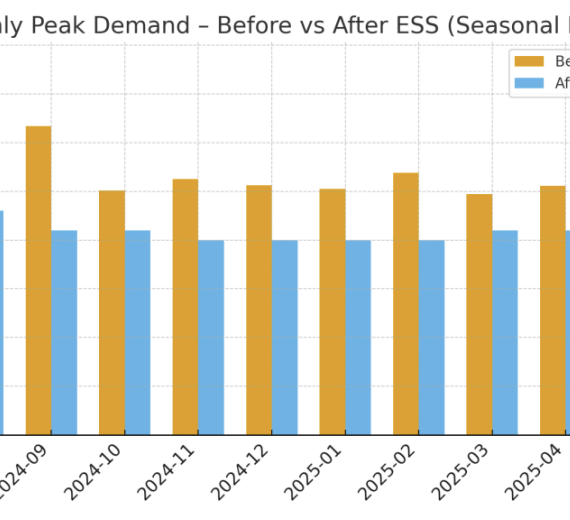
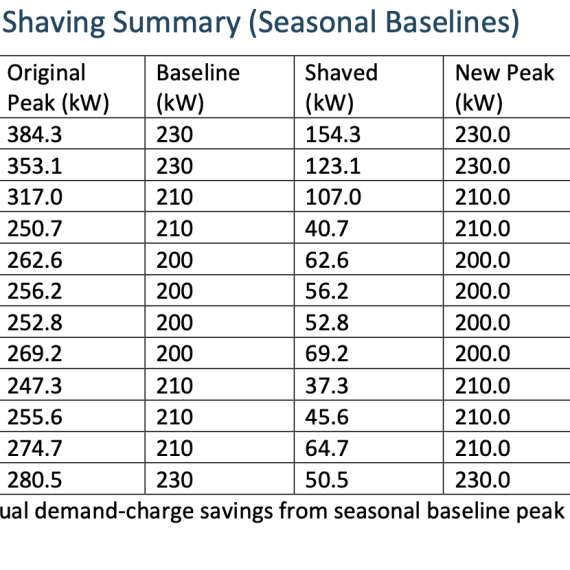
Monthly Peak Shaving: 40–150 kW (seasonally dependent)
Measured Benefits
1. Electricity Cost Savings
Seasonal peak shaving reduces annual demand charges by approximately $11,833 CAD, delivering immediate and measurable savings.
2. Strong Financial Incentives
-
BC Hydro ESI Program: Covers up to 80% of total project costs
-
Federal Investment Tax Credit (ITC): Applies a 30% tax credit to the remaining balance
These incentives dramatically reduce upfront capital requirements and shorten the investment horizon.
3. Demand Response Revenue
By responding to BC Hydro DR events, the ESS generates approximately $7,350 CAD annually in additional revenue.
4. Deferred Infrastructure Upgrades
Peak demand reduction helps delay or avoid costly upgrades to:
-
Transformers
-
Electrical distribution equipment
-
Utility service capacity
5. Improved Building Resilience
A portion of battery capacity is reserved for critical loads, such as elevators and life-safety systems, helping ensure operational continuity during grid disruptions or emergency events.
Intelligent Control and Seasonal Optimization
The system is managed by an advanced Energy Management System (EMS) that dynamically adjusts peak shaving targets based on seasonal load profiles:
| Season | Peak Shaving Baseline |
|---|---|
| Winter (Nov–Feb) | 200 kW |
| Shoulder Seasons (Mar–May, Sep–Oct) | 210 kW |
| Summer (Jun–Aug) | 230 kW |
-
On non-DR days, the ESS automatically shaves peak demand
-
During DR events, the system prioritizes grid support
-
Battery recharging is scheduled during off-peak hours to avoid creating new demand spikes
This adaptive strategy ensures consistent savings while maximizing grid participation value.
Financial Performance and Payback
-
Total Project Cost: ~ $1,000,000 CAD
-
Net Cost After Incentives: ~ $103,400 CAD
-
Annual Net Benefit: ~ $14,183 CAD
-
Simple Payback Period: ~ 7.3 years
Given the typical 15–20 year lifespan of commercial battery systems, this represents a strong long-term return on investment.
Why Now Is the Right Time to Invest in Energy Storage
Compelling Incentives
The combination of BC Hydro’s ESI program and the federal ITC significantly lowers financial barriers to adoption.
Favorable Rate Structures
With demand charges representing a large share of commercial electricity costs, peak shaving delivers immediate value.
Grid and ESG Alignment
Energy storage not only reduces costs but also supports grid stability and sustainability goals.
Future-Proofing Your Building
ESS prepares properties for expanded EV charging, deeper electrification, and higher tenant expectations—enhancing long-term asset competitiveness.
Conclusion
This downtown Vancouver case study demonstrates that, with proper system design and intelligent controls, energy storage systems can significantly reduce operating costs while providing valuable grid services.
As policy support strengthens and technology continues to advance, energy storage is evolving from a niche solution into a core component of modern commercial building strategy.
Interested in learning how a tailored energy storage solution could benefit your building?
Contact us today to explore your options.
The data and analysis presented in this article are based on real load profiles and commercially available system designs. Actual results may vary depending on building usage patterns, grid dispatch frequency, and program updates. Professional assessment and modeling are recommended.
